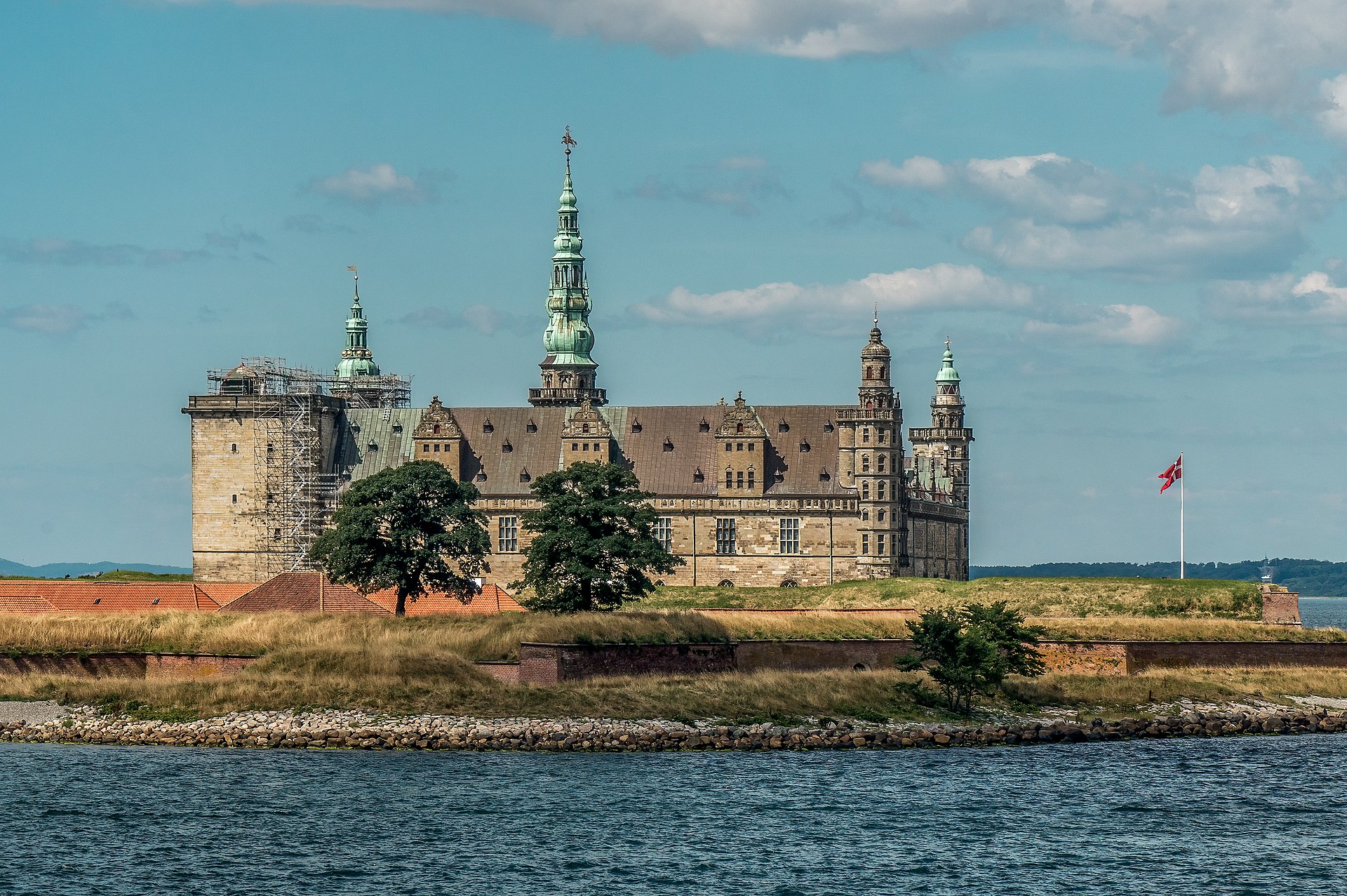
Kronborg Castle
Kronborg Slot UNESCO World Heritage Site since 2000Where Denmark and Sweden come within roughly four kilometres of each other, at the tightest part of the Øresund, Kronborg stands over the harbour of Helsingør in sandstone and green copper. Between 1574 and 1585 King Frederik II rebuilt an earlier fortress on the site into one of northern Europe's grandest Renaissance castles, with much of the design entrusted to the Flemish masters Hans van Paeschen and Antonis van Opbergen.
The castle earned its keep in a very literal way. Its guns enforced the Sound Dues — a toll demanded of every merchant ship sailing between the Baltic and the North Sea — and for generations that toll was among the richest streams of income the Danish crown possessed. The water beneath the ramparts was, for a while, one of the busiest sea-lanes anywhere.
What it is famous for
To readers everywhere Kronborg is Elsinore, the stage of William Shakespeare's Hamlet. The playwright never set foot in Denmark, but English players who performed at the castle in the 1580s carried its name home to him. To this day the courtyard hosts summer performances of the tragedy on the very ground its prince is imagined to have paced.
Far below, in the chill of the casemates, broods the stone figure of Holger Danske (Ogier the Dane) — the legendary sleeper who, the old story promises, will rouse himself the hour Denmark stands in true peril. In 2000 UNESCO added the castle to the World Heritage List, both as an outstanding Renaissance castle and for the part it played in the history of the north.
Good to know
Kronborg is run today as a Danish national heritage site and museum. You can walk the royal apartments, the great ballroom, the chapel and the shadowy casemates beneath. It is a short stroll from Helsingør station, which is about 45 minutes by frequent train from Copenhagen, and the ferry across to Helsingborg in Sweden takes only around 20 minutes.